

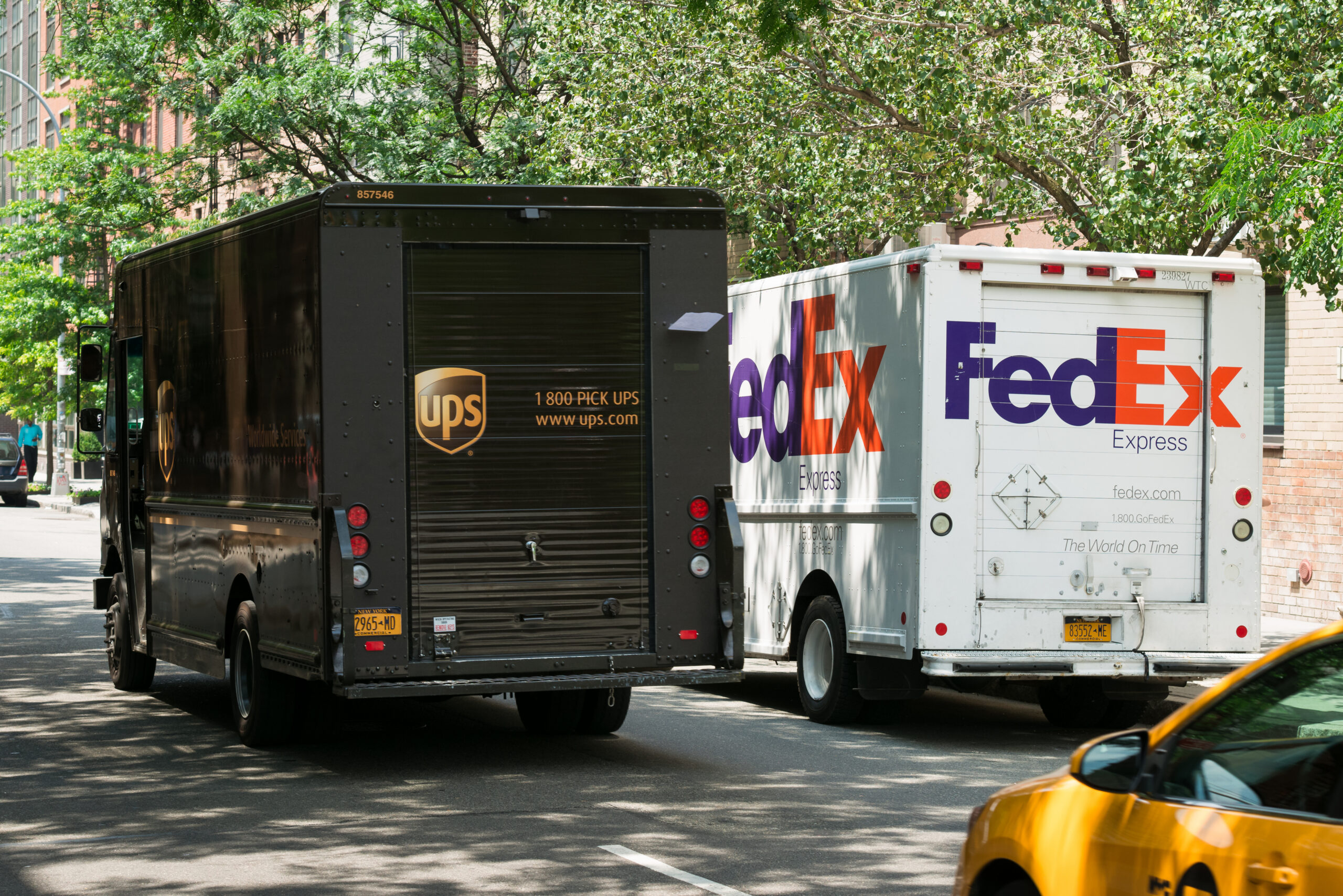
Delivery trucks are a constant presence on Chino Hills roads. From the busy stretches of Peyton Drive to residential streets throughout the city, Amazon vans, FedEx trucks, and UPS vehicles log thousands of miles every day across the Inland Empire. With that volume of traffic comes real risk. When one of these large commercial vehicles strikes a pedestrian, cyclist, or another driver, the injuries can be serious, and the legal questions that follow are rarely straightforward.
If you were injured by a delivery vehicle in Chino Hills or anywhere in California, understanding who is responsible and how to pursue a claim is the first step toward recovering what you’ve lost.
Why Delivery Vehicle Accidents Are Legally Complex
Delivery vehicle accidents often involve multiple parties, including drivers, staffing companies, and corporate giants, making liability far harder to establish than in a standard crash.
A collision involving a personal vehicle usually comes down to two drivers and their insurance companies. A delivery vehicle accident is different. These crashes can involve:
- The delivery driver personally
- The company that employed or contracted the driver
- A third-party delivery service provider (DSP)
- The vehicle owner or fleet management company The vehicle owner or fleet management company (under California Vehicle Code § 17150, owners may also be held liable under permissive-use laws)
- Amazon, FedEx, or UPS as the contracting corporation
Amazon, in particular, has built a large network of independent delivery service partners, local contractors who operate branded vans but are not direct Amazon employees. This structure can complicate direct claims against Amazon when one of its drivers causes a crash. However, whether Amazon may also be liable depends on factors such as its control over delivery operations, its branding and public representations, hiring and safety practices, and the relationship among Amazon, the DSP, and the driver.
FedEx uses a mix of employee drivers and contracted service providers depending on the business line. UPS package-delivery drivers are generally UPS employees, though the precise corporate entity and insurance coverage should be confirmed from the accident report and vehicle information. Determining whether a driver was an employee or an independent contractor at the time of your accident directly affects which insurance policy applies and which company shares responsibility.
Common Causes of Delivery Vehicle Accidents in California
Most delivery vehicle crashes in California stem from driver pressure, distraction, or poor vehicle maintenance, all of which can support a negligence claim.
The demand placed on delivery drivers is intense. Routes are timed, packages are tracked in real time, and drivers face pressure to complete stops as fast as possible. That environment creates specific risks on California roads:
- Distracted driving while using route-guidance apps or scanning barcodes
- Fatigue from long shifts, especially during peak seasons
- Improper parking that blocks sightlines or forces other drivers to maneuver around stopped vehicles
- Running red lights or failing to yield while rushing between stops
- Poor vehicle maintenance, including brake failure or tire blowouts on aging fleet vehicles
California Vehicle Code Section 21703 prohibits following another vehicle too closely, and Section 22107 requires drivers to signal and make sure a lane change can be made with reasonable safety. When a delivery driver violates these or other traffic laws and causes a crash, that violation is strong evidence of negligence.
Who Pays After a Delivery Vehicle Accident?
In California, liability for a delivery vehicle accident may fall on the driver, the employer, the contracting company, or all three, depending on how control was exercised.
California follows the doctrine of respondeat superior, meaning an employer can be held liable for an employee’s negligent acts committed within the scope of employment. When a FedEx driver runs a red light while making deliveries, FedEx may be vicariously liable for the resulting injuries.
For Amazon’s DSP model, the analysis is more nuanced. Amazon’s DSP drivers generally work for independent DSP businesses, not Amazon directly. While California’s ABC test governs certain wage-and-hour classifications, third-party accident claims focus on traditional tort doctrines such as agency, actual control over delivery operations, negligent hiring, and negligent supervision, rather than direct employment status alone.
California also recognizes negligent entrustment as a separate theory of liability. If a company knowingly allowed an unqualified or unsafe driver to operate one of its vehicles, it may face liability beyond what standard vicarious liability would cover.
Large carriers like Amazon, FedEx, and UPS may carry substantial commercial insurance policies. Those policies are designed to protect the company, not you. Their claims adjusters and legal teams move quickly after accidents, and their goal is to limit payouts, not to ensure you receive fair compensation.
Steps to Take After Being Hit by a Delivery Vehicle
The actions you take immediately after the accident can protect your ability to recover compensation. If you are physically able:
- Call 911 and get an official police report on record.
- Photograph the delivery vehicle, its markings, the license plate, and the scene.
- Get the driver’s name, employer, and any visible vehicle identification number.
- Collect contact information from witnesses.
- Seek medical care promptly, even if symptoms seem minor at first.
Soft tissue injuries, concussions, and internal injuries often worsen in the days following a crash. A delay in treatment can be used by insurers to argue your injuries were not caused by the accident.
California’s statute of limitations for personal injury claims is generally two years from the date of injury under California Code of Civil Procedure Section 335.1. Missing that deadline means losing your right to sue, regardless of how strong your case is, subject to limited exceptions.
The Paris Firm Is Ready to Help
Injury claims against Amazon, FedEx, and UPS are not simple. These companies have experienced legal teams and large insurance policies backing them, and they will not simply hand over a fair settlement.
At The Paris Firm, we have been fighting for injured Californians since 1994. Attorney Eric D. Paris founded this firm with one focus: standing up for people who have been hurt through no fault of their own. If you were injured by a delivery vehicle in Chino Hills or the surrounding Inland Empire area, we are ready to review your case and help you understand your options.
Call us today at 909-325-6185 to get started.


