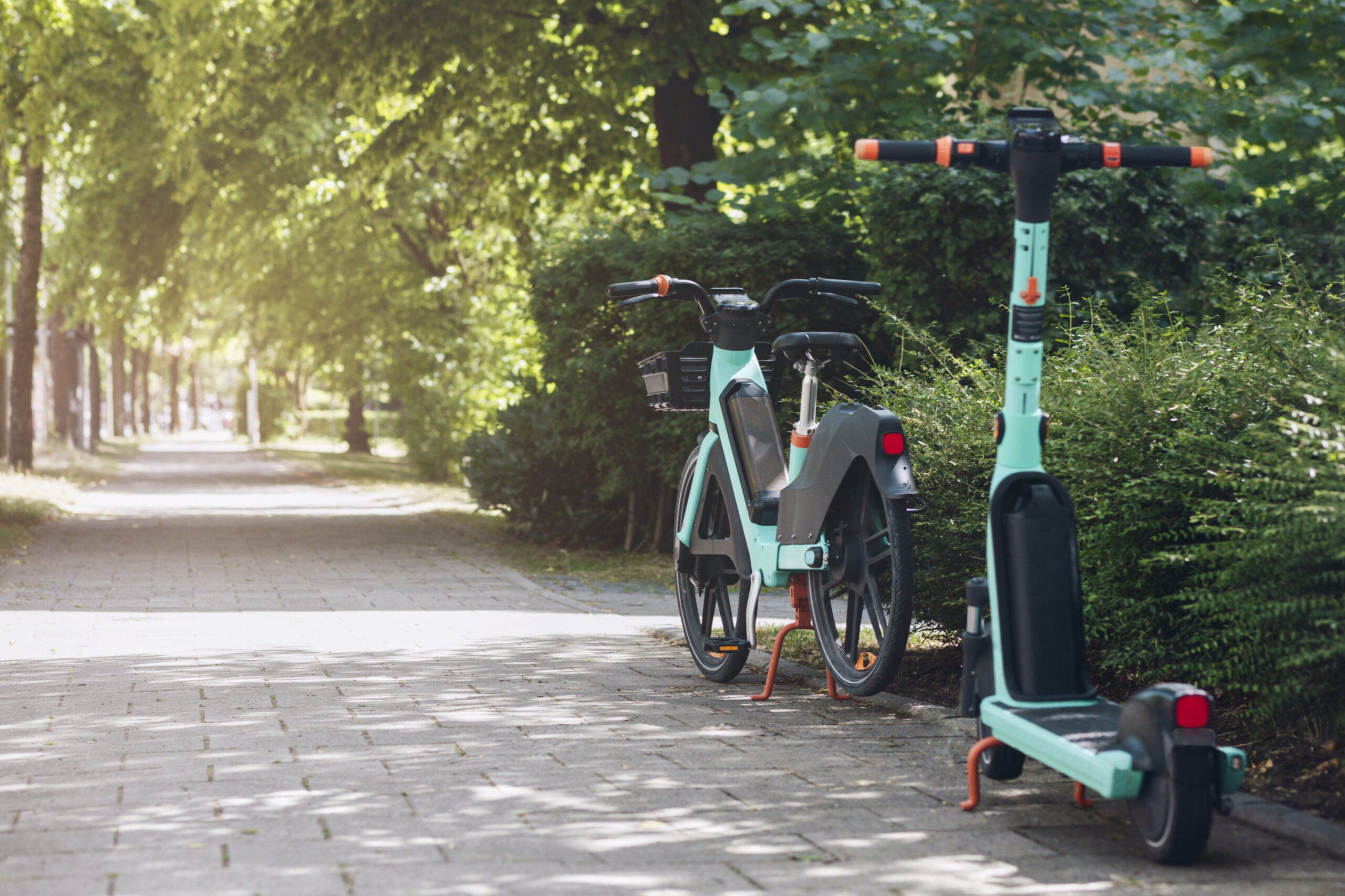
Chino Hills has seen a steady rise in e-bikes and shared scooters on its streets, bike paths, and mixed-use trails. What started as a convenient, eco-friendly way to get around has also produced a growing number of serious accidents. When a Bird or Lime scooter goes down, or when an e-bike collides with a pedestrian or car, the legal questions that follow can be complicated. Who pays? Who is responsible? And what does California law actually say?
Understanding e-bike and e-scooter accident liability in California is the first step toward protecting your ability to recover compensation after a crash.
How California Classifies E-Bikes and E-Scooters
California law divides e-bikes into three classes based on speed and motor assistance, and each class carries different rules for where and how they can be ridden.
Under California Vehicle Code Section 312.5, electric bicycles fall into three categories:
- Class 1: Pedal-assist only, motor cuts off at 20 mph
- Class 2: Throttle-assisted, motor cuts off at 20 mph
- Class 3: Pedal-assist only, motor cuts off at 28 mph, and riders must be at least 16 years old under Vehicle Code Section 21213, and all operators and passengers must wear a bicycle helmet regardless of age under Vehicle Code Section 21213(b).
Unlike Class 1 and 2 e-bikes, Class 3 e-bikes are restricted under California Vehicle Code Section 21207.5 from bicycle paths or trails, bikeways, bicycle lanes, equestrian trails, and hiking or recreational trails unless the path is within or adjacent to a roadway or permitted by local ordinance. Additionally, local authorities may prohibit e-bikes of any class on equestrian, hiking, or recreational trails under their jurisdiction. In San Bernardino County and cities like Chino Hills, local rules can further restrict where these bikes can be ridden. If a rider was operating an e-bike in a prohibited area and that violation contributed to a crash, it may affect how fault is assigned.
Electric scooters, including those rented through platforms like Bird and Lime, are defined separately under California Vehicle Code Section 407.5. Riders must have a valid driver’s license or instruction permit and must wear a helmet if under 18. State law also limits where and how fast scooters can be ridden—specifically capping their speed at 15 mph, prohibiting their operation on sidewalks, requiring them to use bike lanes on roads posted over 25 mph, and banning passengers—and riders are strictly prohibited from operating shared scooters under the influence of alcohol or drugs.
Who Can Be Held Liable After an E-Bike or Scooter Accident?
Liability in these cases rarely falls on just one party. Depending on how the crash happened, multiple parties may share responsibility under California’s comparative fault rules.
California follows a comparative fault system, which means that an injured person’s own share of fault can affect their recovery. This matters a great deal in e-bike and scooter accidents, where fault is often disputed.
Potential liable parties include:
- The rider: A reckless or distracted scooter rider who causes a collision can be held personally liable for injuries they cause to others.
- A motor vehicle driver: Drivers who fail to yield, open car doors into bike lanes, or cut off a rider bear responsibility just as they would in any other traffic accident.
- The scooter company: Bird and Lime typically include user agreements that attempt to limit their liability, but those agreements are not always enforceable. If a scooter had a known mechanical defect, was improperly maintained, or malfunctioned due to a design flaw, the company could face product liability or negligence claims.
- A property owner: If a dangerous condition on private property, such as a poorly maintained parking lot or an unmarked drop-off, contributed to a fall, the property owner may carry some liability.
- A government entity: Crumbling pavement, unmarked construction zones, or missing signage on public streets can expose a city or county to liability. Claims against government entities in California follow strict procedural rules, including a six-month window to present a government tort claim under the Government Claims Act, followed by a separate six-month deadline to file a lawsuit if the claim is denied.
What Injuries Are Common in These Accidents?
E-bike and scooter riders are exposed. Unlike car occupants, they have no surrounding structure to absorb impact. Crashes commonly result in head trauma, broken bones, road rash, spinal injuries, and torn ligaments. Even a low-speed fall can send someone to the emergency room.
Pedestrians struck by e-bikes or scooters face similar risks, especially older adults whose injuries are more likely to be severe.
California’s Statute of Limitations for Personal Injury Claims
In most California personal injury cases, the statute of limitations is two years from the date of the injury under California Code of Civil Procedure Section 335.1. Miss that deadline and the right to sue is gone.
The deadline shortens significantly when the liable party is a government entity. If a defective road or government-maintained path contributed to the crash, a government tort claim must be presented to the public entity within six months of the incident; if denied, a lawsuit must generally be filed within six months of the denial notice. This tight window catches many injured people off guard, which is why acting quickly is critical.
What to Do After an E-Bike or Scooter Accident in Chino Hills
If you are injured in one of these accidents, a few steps can protect your ability to pursue a claim:
- Call 911 and get medical attention, even if injuries seem minor at first.
- Document the scene with photos of the scooter or bike, road conditions, and any visible injuries.
- Collect contact and insurance information from anyone involved.
- Report the incident to the scooter company through the app if a rental vehicle was involved.
- Avoid giving recorded statements to insurance adjusters before speaking with an attorney.
How The Paris Firm Can Help
Accident liability involving e-bikes and scooters is a developing area of California law, and insurance companies know how to use that uncertainty to their advantage. At The Paris Firm, founder and personal injury attorney Eric D. Paris has been fighting for the rights of injured people in California since 1994. We understand how these cases are built, how liability is contested, and what it takes to hold the right parties accountable.
If you or someone you love was hurt in an e-bike or scooter accident in Chino Hills or the surrounding area, contact us today at 909-325-6185 to discuss your situation with our team.